
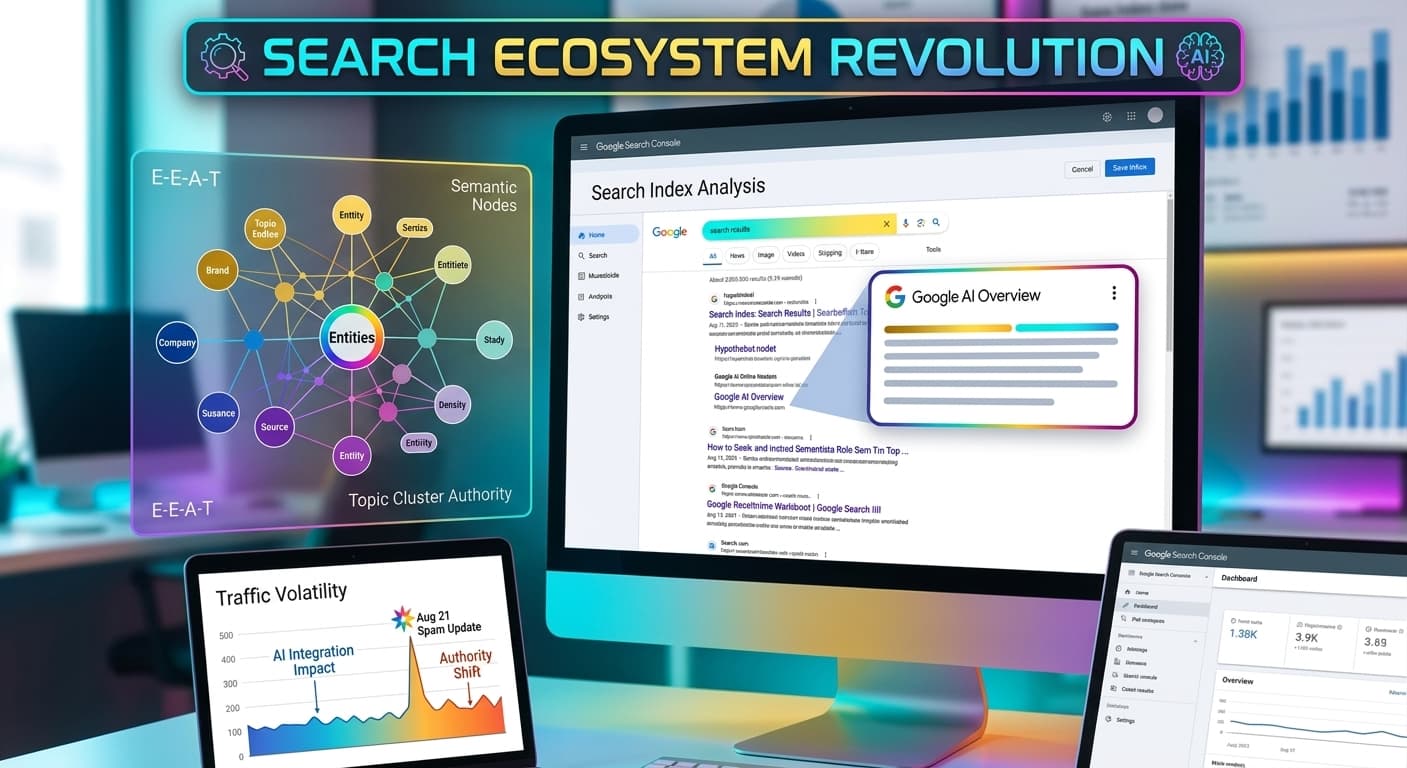
Google’s 2026 algorithm updates target low-quality AI manipulation while enforcing strict E-E-A-T standards across global search rankings.
Search Landscape Shifts as Google Cracks Down on AI Manipulation and Automated Content
MOUNTAIN VIEW, CA - Following a rapid succession of algorithm overhauls throughout 2026, Google has significantly altered the search optimization landscape. The updates-culminating in the completion of the global August 2026 Spam Update-mark a major turning point in how automated content, AI generated answers, and site authority are evaluated across search engine result pages (SERPs).
The August deployment, which ran from August 18 to August 21, triggered noticeable ranking volatility across multiple commercial sectors. Unlike standard spam passes of the past, this latest enforcement coincided with updated search policies that explicitly target manipulative tactics aimed at AI Overviews and AI Mode responses. Pages generated purely to exploit automated scraping or gain unearned citations in generative summaries now face direct demotion penalties alongside traditional ranking spam.
This crackdown follows a series of broad core updates earlier this year. In May 2026, Google completed a major multi-week core update intended to suppress shallow, templated pages in favor of deep, original reporting and authentic first-hand experience (E-E-A-T). Furthermore, modifications to Google Discover algorithms earlier in the year signaled a shift away from content aggregation toward topical authority and established publisher signals.
Architectural Overhauls in Search Infrastructure
Google's sequential deployments throughout 2026 reflect an explicit shift toward structural indexing changes. Rather than evaluating individual pages in isolation, ranking systems now scrutinize cross-site patterns, content creation workflows, and real-time interaction models.
The Mechanism Behind the 2026 Core and Spam Rollouts
The engineering shifts executed in the mid-2026 rollouts focus on real-time pattern detection. Rather than relying solely on periodic manual link-graph recalculations, search algorithms are prioritizing site-level authenticity indices.
Deep Signal Analysis in Modern Core Updates
Entity Verification: Search algorithms correlate content entities with verified knowledge bases, ensuring named entities demonstrate explicit relational proximity to their primary niche.
Behavioral Consistency: Crawlers track whether user pathways confirm intent satisfaction, penalizing high-bounce clickbait patterns directly at the algorithm level.
Information Gain Scoring: Pages offering zero unique information beyond existing index entries are routinely downgraded, regardless of domain authority.
Structural Breakdown of Targeted Signals
[ Crawled Page Content ]
          │
          ├──> 1. Experience & Origin Check (Firsthand Media / Data)
          ├──> 2. Semantic Coherence & Topic Cluster Proximity
          └──> 3. AI-Generation Pattern Detection & Formatting Variance
          │
          ▼
[ Algorithmic Verdict: Core Boost vs. Spam Demotion ]
Chronological Summary of 2026 Algorithm Changes
February 2026 (Discover Core Update): Suppressed engagement-bait and targeted sensationalized clickbait titles in mobile feeds.
March 2026 (Core Update): Re-calibrated baseline domain authority models across broad transactional queries.
May 2026 (Core Update): Tightened guidelines surrounding mass-produced thin content and lack of author credentials.
June 2026 (Spam Update): Broad enforcement against abusive link networks and automated redirection strategies.
August 2026 (Spam Update): Global rollout explicitly targeting manipulative generative-AI optimization tactics.
What the Changes Mean for Web Publishers
Search engine optimization strategies are pivoting rapidly to keep pace with these automated enforcements. The industry is shifting away from traditional keyword targeting toward Answer Engine Optimization (AEO) and entity-based topical authority.
"The core takeaway from the 2026 rollouts is simple: attempting to game AI-generated search blocks carries the same long-term risk as old-school link farming. Google is aggressively clearing out thin content to make room for verified human expertise."
Industry experts advise webmasters experiencing ranking shifts to review baseline analytics in Google Search Console following the mid-August updates. Rather than attempting rapid technical fixes, site owners are encouraged to focus on building comprehensive content clusters, incorporating original visual assets, and ensuring clear structural markup to align with Google's updated quality signals.